Horse Portrait Outline: A Designer's Business Review
As a professional embroidery designer who has spent years translating digital files into tangible brand assets, I approach every new machine embroidery design with a critical eye. It is not enough for a file to look good on a screen; it must translate flawlessly onto fabric, withstand the rigors of commercial use, and elevate the perceived value of the finished product. Today, I am reviewing the Horse Portrait Outline, a design categorized under Farm Animals within the broader realm of Embroidery. This review is written specifically for small business owners, apparel decorators, Etsy sellers, and merch creators looking to integrate this motif into their branded merchandise.
First Impressions: Visual Personality and Brand Fit
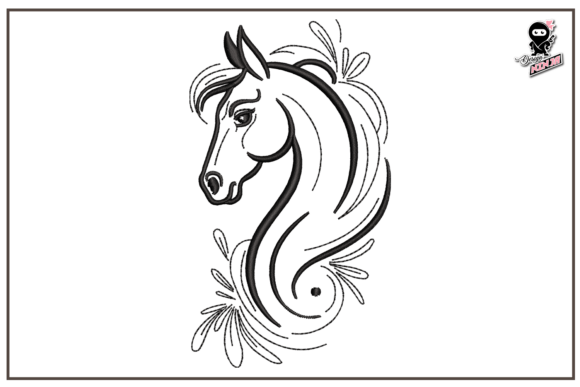
Upon opening the digital embroidery file for the Horse Portrait Outline, the immediate impression is one of classic elegance mixed with rustic charm. The outline style suggests a clean, defined silhouette that avoids the clutter often found in highly detailed fill designs. For a small business, particularly those in the boutique, bakery, florist, or pet care sectors, this aesthetic is incredibly versatile. It feels handmade yet professional, striking a balance that appeals to modern consumers who value artisanal quality without sacrificing a polished look.
The design does not scream "loud" or "playful"; instead, it whispers sophistication. This makes it an excellent candidate for building a cohesive brand identity. Whether you are launching a line of organic cotton tote bags or creating staff uniforms for a high-end equestrian café, the Horse Portrait Outline offers a visual anchor that feels timeless. It lacks the dated feel of clip art, positioning your small business merch as a premium offering rather than a generic commodity.
Real-World Application: From Patches to Uniforms
The true test of any embroidery file lies in its application across various substrates. Here is how the Horse Portrait Outline performs in specific business scenarios:
- Embroidered Patches: This design excels as a standalone patch. The clear outlines ensure that even when backed by felt or twill, the shape remains distinct. It is perfect for adding to denim jackets, canvas backpacks, or as a detachable badge for event staff.
- Staff Uniforms and Aprons: For a café or boutique, placing this design on the chest pocket of a work shirt or the bib of an apron adds a touch of personality. Because it is an outline, it does not overwhelm the wearer, maintaining a professional appearance while signaling the brand's connection to nature or animals.
- Cap Embroidery: Caps require careful design selection due to curved surfaces. The Horse Portrait Outline is ideal here because the lack of intricate internal shading reduces the risk of puckering. It sits flat and looks crisp on the front panel of a structured cap.
- Tote Bag Design: On heavy-duty canvas tote bags, this design can be scaled up slightly to serve as the primary logo. The bold lines read well from a distance, making it effective for promotional giveaways or retail shopping bags.
- Product Packaging Accents: For handmade brands selling goods like soaps, candles, or treats, applying this design to a fabric hang tag or a ribbon accent elevates the unboxing experience.
Critical Considerations for Commercial Production
While the Horse Portrait Outline is robust, there are specific areas where caution is required to ensure the highest quality output. As a designer, I always advise my clients to consider the following before committing to a full production run:
Scale and Detail
Outline designs rely heavily on line weight. If you attempt to shrink this design too much for a tiny label or a small patch, the lines may become indistinguishable or break during stitching. Always test the design at your intended size first. If the lines appear too thin, the stitch density might need adjustment, or the design may need to be upscaled slightly to maintain integrity.
Fabric Texture and Stabilization
When working with textured fabrics like fleece, wool, or heavy linen, the definition of an outline can sometimes get lost. The needle must penetrate the fabric cleanly to create sharp edges. I strongly recommend using a high-quality stabilizer appropriate for the fabric weight. Without proper stabilization, the outline may wobble, ruining the professional finish of the finished product.
Color Contrast and Visibility
Since this is an outline design, the choice of thread colors is paramount. On dark uniforms or black caps, a single-color outline might disappear if the contrast is insufficient. Consider using a bright thread color against a dark background or utilizing a two-tone technique where the outline is one color and the interior (if filled) is another. Always check the printable mockup against your actual fabric swatch before starting production.
Hooping and Placement
Ensure your machine's hoop size accommodates the design dimensions comfortably. Hooping the design too tightly or leaving it too loose can distort the proportions of the horse portrait. For curved items like caps, use specialized hoops or floating techniques to prevent the fabric from shifting during the stitch sequence.
Impact on Brand Identity and Customer Trust
In the competitive landscape of custom apparel and handmade goods, details matter. Using a high-quality design like the Horse Portrait Outline signals to your customer that you care about quality. A poorly stitched, blurry logo erodes trust, whereas a crisp, well-executed design enhances the perceived value of your products.
This design helps create visual consistency across your design assets. When your logo, social media graphics, and physical merchandise all share the same refined aesthetic, it reinforces your brand message. Customers begin to associate the clean lines of the horse portrait with the reliability and craftsmanship of your business. Whether used as a subtle sleeve detail on a uniform or a bold statement on a tote bag, it acts as a silent ambassador for your brand.
Practical Designer Notes for Implementation
Before integrating the Horse Portrait Outline into your workflow, follow these practical steps to ensure success:
- Test in Black and White: Run a test stitch in a neutral color first to check for gaps, jumps, or tension issues without worrying about color matching.
- Verify Licensing: Confirm that the commercial embroidery license allows for the volume of production you plan. Ensure you have the rights to use the design on sellable goods.
- Check File Integrity: Open the embroidery file in your preferred software to verify that all points are connected and the sequence is logical.
- Create Mockups: Generate a realistic printable mockup showing the design on your specific product. This is essential for client approval and internal visualization.
- Compare with Other Assets: Place the Horse Portrait Outline next to other logos or text you plan to use. Ensure the visual weight balances correctly.
The Horse Portrait Outline is more than just a decorative image; it is a strategic tool for businesses looking to stand out. By understanding its strengths and limitations, you can leverage this design to create memorable, high-quality merchandise that resonates with your audience. Whether you are a seasoned decorator or a new Etsy seller, this design offers a solid foundation for building a recognizable and trusted brand.